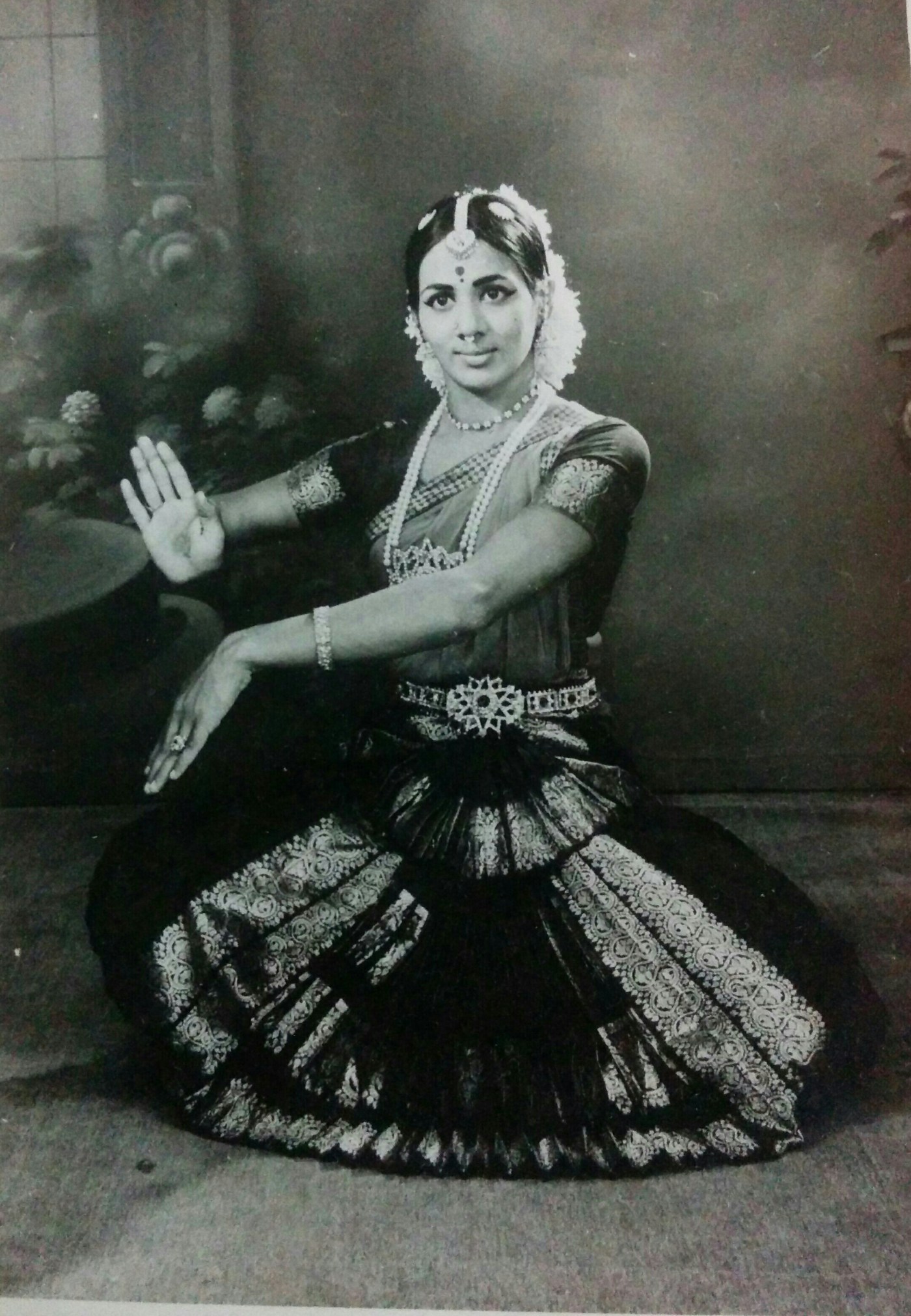
The nattuvanars were true masters of art. Well-versed in multiple areas of dance, music, rhythm and the nuances of various languages, they were versatile artists with a strong scholastic background of the arts that was finely honed through many generations.
Growing up in a household filled with music and dance, the nattuvanar received a concentrated dose of fine art right from the womb.
Mridangists would consult nattuvanars on rhythm- such was their mastery. Today, dance teachers learn aspects of rhythm from mridangists. Great stalwarts of Indian arts and representatives of a highly sophisticated ancient culture where art and life were seamlessly woven, the nattuvanar’s contribution is such that we can bow our heads to them eternally.
In an effort to understand my dance lineage, I posed a few questions to my teacher, Guru B. Bhanumati, regarding her Guru, Padmashri Sri K.N. Dandayuthapani Pillai.
Being in the presence of Bhanu Mam is an elevating experience in itself. Steeped in the traditional Vedic way of life, she exudes the purity and grandeur of the days of yore.
Endowed with an unshakable inner strength and conviction, feminine grace, wisdom borne of experience and a most endearing personality, Bhanu Mam attracts everyone to her like bees to pollen. Extracting the nectar is the job of the student and for a deserving student, the nectar pours. I asked her a few questions regarding her time studying under Sri Dandayuthapani Pillai. Here is the following interview.
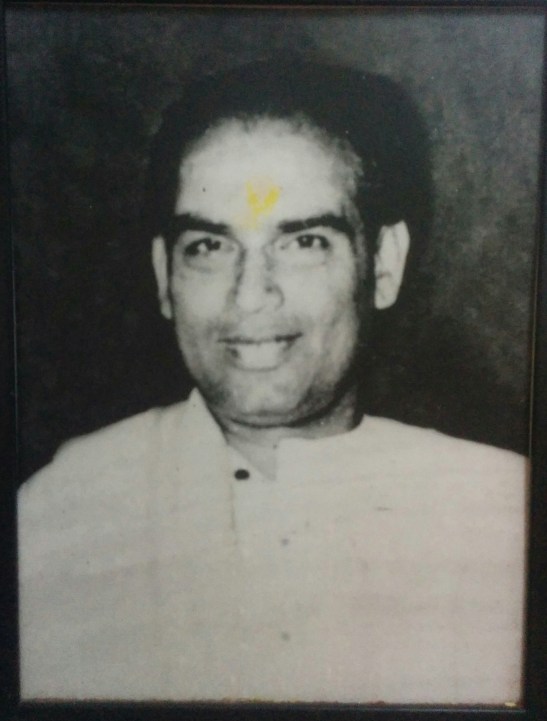
Q: How did you come to learn under Sri Dandayuthapani Pillai?
A: I saw a beautiful performance by two sisters who were known as Adyar sisters in a sabha. They performed Kavava. I was floored by their training, dance and the choreography. My impression of dance and excellence in dance was Kamala [Kamala Lakshman, noted danseuse and actress in the Indian film industry during the 1950s].
Seeing Kamala influenced me to learn dance. These two impressed me next and we requested Wadyar to take me as his student. This was at the end of 1969. I was 23 years old.
Q: What was his class structure like and how would he teach?
A: He would teach Monday-Friday from 4-8pm. He insisted that I attend class everyday. I learned one margam from him, which was Rs.4000 and after that the fees were just Rs.25 per month. We would start with adavus and progess to items. Wadyar had been to my Arangetram so I went through the adavus quickly.
He had a small hall in the house which had a separate entrance. At a time only 4- 5 could dance so others would sit and watch. Unless he asked you to dance, you could not, you had to sit and watch. I was with him from 1970-1974, when he passed away. I took one year to finish one margam and then I used to just go to class. He insisted that I attend everyday and watch though I didn’t learn any new items for the next three years.
Q: Please say a few words about Wadyar
A: He was a very enthusiastic teacher. He was always ready and excited to share his new ideas for music, choreography, jatis- anything. He loved to teach and share his thoughts. He was also short-tempered when it came to others criticising his work.
If a student gave him a gift like a necklace or new kurta, he would proudly wear it and say, “See? It was her gift.” There was an innocence in him in that respect.
Wadyar was very innovative in his jati compositions and his choreography was also very creative. His musical compositions are extremely beautiful and also unique.
For example, he composed Ulagam Pugazhum, a kriti which talks about the greatness of dance and the benefits of dance for both the dancer as well as the audience and how everything in the world can be shown through dance itself. He also composed a varnam for small children on Amma- how Amma is the one who gives us food to eat, who bathes us and loves us and teaches us all about life. Small children will easily be able to relate to this varnam as the topic is Amma. He has also choreographed a tisra alaripu which has sarva deva namaskara and shodasha upachara puja vidhi incorporated into the item.
Like this, he had many other beautiful compositions and ideas.
Q: What sort of relationship did you have with him personally?
A: I did not have a personal relationship with him as such. Wadyar had two wives who would sit in the window overlooking the class. They would refer to me as “daridram.” We had many film actresses and celebrities in our class such as Jayalalitha, Asha Parekh, Waheeda Rehman, Srividya (grand-daughter of M.L. Vasanthkumari), Manjula, among others. They would bring very expensive gifts during festival times for Wadyar and his wives. I could only afford to bring coconut and vetele pak. Whenever he would hear the outside gate opening, he would ask, “Who has come?” If I ever walked in the door, they would reply, “Ande daridram vandirke.” Due to this pressure to keep his wives happy, Wadyar kept me at a distance but insisted that I attend class everyday and stay until 8pm and walk his assitant Suryakala home. Her home was on the way to my house. I used to go by cycle, so I would walk with her till her house and then cycle home.
Though Wadyar would not openly tell me, I would hear from our orchestra that he would praise me with them that I dance well and would express that he wanted to help me and that I should come up in the field of dance. In those days, every dance school had its own orchestra. If one of the orchestra members was offered a chance to play for somebody else, they had to first take permission from Wadyar. Naturally, the bond between the orchestra and Wadyar was very tight.
He had a student, actress Manjula. In those days, if an actress were to do a solo performance, she would charge Rs.20,000. In those days. Out of that, Rs.5000 would go to Wadyar. Manjula looked like Devi in her costume. She was so beautiful. And because she was a film actress, she would always gather a large audience. She would change her costume for every item, so in between 2 items, they needed a filler. Wadyar asked me to dance for that. He knew that I could not afford a costume or jewelry so he gave me a person’s number to hire the costume and jewelry from them and that he would pay the charges. This continued for some time. Then one day he told me that he would pay me Rs.200 for a program and that I should slowly start collecting jewelry one by one.
After some time, I had purchased a full set.
Wadyar had one student who used to work as an extra in films and was also a prostitute. She hardly used to come for class. One day she came crying and fell at his feet and begged him to keep her as his student and gave him Rs.200. His wives said, “See? She gave you Rs.200 and that daridram gives you only Rs.25. Why don’t you take her instead for the dance program?” Because of their pressure, he put her in the next program and the audience threw tomatoes, one of which fell on Wadyar. He was furious and took me back for the following shows. But depending on his wives’ mood, I would be called or not called.
Finally, when he was admitted in the ICU in 1974, he would be coming in and out of consciousness. Later I was told that whenever he would wake up he would say, “Bhanu? Bhanu enge? Ask her to accept programs, I will do nattuvangam for her.” The day he passed away, I went to his funeral and his wives started shaking him saying, “See? Bhanu has come! You said you would do nattuvangam for her! See? She has come!” That day I felt really bad. All those years because of them I could not learn what he would have taught me and now….
Many years later my troupe, Bharatanjali performed in Chennai and his two wives had attended the program. They came to me in tears afterwards as I had kept all his jatis intact without changing a single adavu and talked about him and his compositions during the intro. They were so moved. They said that their own daughter had changed all his jatis.
Q: How have you carried on his legacy?
A: I see that in his own way, Wadyar tried his best to help me. I am the only student apart from Jaylakshmi Alva who carried on his work. The rest of them went into films or did not pursue dance as a career. The film stars and celebrities provided him with lavish gifts and honours at the time but none have carried his name forward.
You will not believe, I had learned only one margam from him. After that I used to just attend class and sit most of the time. After he passed away I didn’t know what to do. My mother told me to start teaching. I thought nobody would come to me as I know only one margam, but believe it or not, once I started putting tattu kol, I realized I knew every adavu of many more items! Altogether I had four margams! I am still shocked to this day as to how this has happened. I have continued to teach his items unchanged to all my students.
Anyone who comes into contact with Guru B. Bhanumati gets infected with an intense love for the joy of dance. In her class and due to her company, we not only learn items, but become more and more satvik in nature. She imparts that. She gives every student, no matter which skill level, the space to grow. There is no place in Nrityakalamandiram for a person with attitude and over-ambition, but be assured that if such a person decides to stay in Nrityakalamandiram, their attitude will naturally drop and the true essence of the person will shine forward. This has been my personal experience.
 beneath a banyan
Leave a comment